Speed Up Your Workflow: Using Bad First Drafts to Overcome Perfectionism — with Julia Farina, Calendly
Most people facing a big, undefined project do the same thing: they wait. They wait for the full picture to come into focus, for the perfect plan to form in their head, for enough confidence to put something down that won’t embarrass them. So the project sits, untouched, while the pressure to get it right quietly builds.
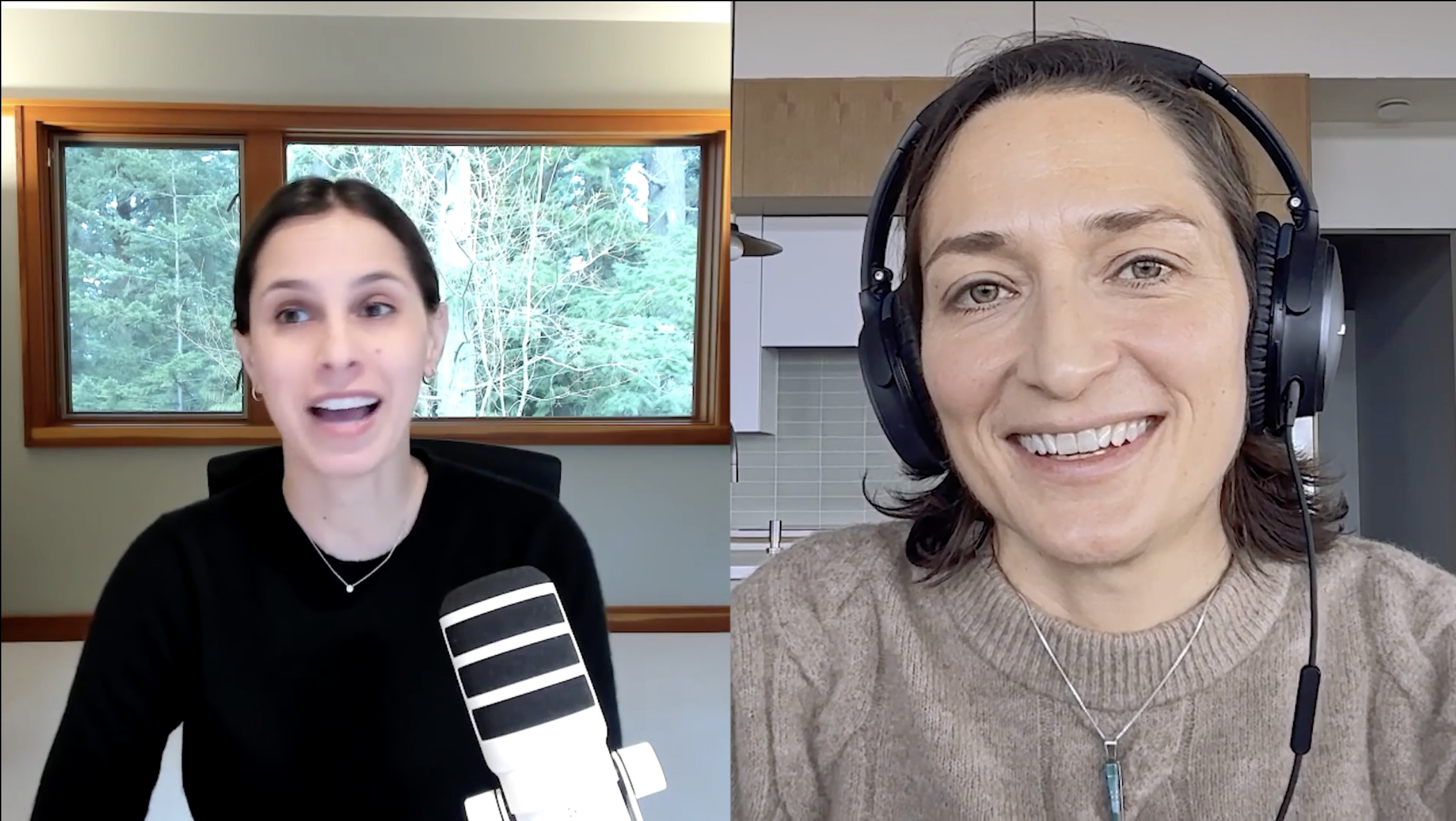
Julia Farina has a different approach. As Director of Product Marketing at Calendly, she's spent over a decade guiding teams through scrappy startups, global organizations, acquisitions, and constant shifting priorities. Her work sits at the intersection of research, sales, product, and leadership, where the job is rarely as simple as executing a known plan. More often, it's wrestling with the ambiguous and nebulous problem nobody has fully defined yet.
Farina's core idea is refreshingly low-pressure: your first move on a hard project shouldn't be your best work. It should be your worst.
Nebulous Projects Need a Mindset Shift First
Product marketing, Farina explains, is something of a “middle-child” role. It cuts across teams, translating product work into something the market can understand and trust. Some of that work is straightforward execution: ship a feature, send an email, run a campaign. But the bigger asks, like figuring out pricing and packaging for a new product line, or building trust around a new AI feature, don’t come with a clear path from problem to solution.
That’s where high achievers tend to get stuck. The absence of an obvious answer can feel like a personal failure rather than a normal feature of hard problems. Farina’s first move is a mindset check: someone trusted you with this problem, so trust yourself to find your way through it, even without knowing the ending yet.
Treat the Problem Like an Open World, Not a Test
Farina compares working through ambiguity to playing an open-world video game as a kid. You’re dropped into unfamiliar territory without a map. You wander, talk to people, pick up strange items you don’t yet understand the purpose of, and eventually those pieces click into something useful. The job isn’t to have answers upfront, but rather to ask good questions and stay curious long enough for a point of view to take shape.
That starts with a listening tour. Talk to coworkers, customers, and anyone with a relevant perspective, expert or not. Take notes. Let a few real nuggets of insight surface naturally, rather than forcing a framework before you’ve gathered enough input to build one.
The #Bad Version
Once there's enough raw material to work with, Farina’s signature move comes in: the bad version draft.
She picked up the phrase at a previous company, where #badversion was baked into the culture. The idea is simple. Instead of agonizing over a polished first attempt, set a timer, usually 20 minutes to an hour, and force out a rough, intentionally imperfect draft. Then share it. Label it clearly as a bad version, invite feedback, and let the work get pulled into shape by other people's reactions instead of your own internal editor.
This reframes the emotional stakes of sharing work. A bad version draft doesn’t set the standard for whether you’re good at your job. It’s actually a tool for getting unstuck and inviting collaboration early, before too much time gets sunk into a direction that might not hold up. Most people are already capable of producing something useful; the real block is rarely ability, it’s the fear of putting unfinished thinking in front of others.
Perfectionism Sets You Up to Fail
Farina is direct about why the instinct toward a flawless first draft backfires. No one, regardless of experience level, has all the answers. Markets shift. Competitors move. Company strategy changes year over year. Believing you can produce the single perfect plan on your own sets up an emotional crash the moment reality complicates it.
The fix isn't more effort spent alone. It's trusting the process: have conversations, stay curious, accept that your job is to ask questions rather than already know the answers. Working through ambiguity becomes less scary, and even enjoyable, once you stop treating it as a solo performance under pressure.
Know When You’re Optimizing the Wrong Thing
Farina and Rebecca Shaddix both point to a familiar trap: spending so much energy refining the smallest details that the bigger picture gets lost. Shaddix describes a past workplace culture built around appearances, where every pixel of a slide deck mattered more than whether the underlying strategy was sound. That kind of environment quietly trains people to obsess over polish instead of impact.
The corrective is understanding what's actually being optimized for at each stage of a project. Early on, a bad version draft is exactly right. Later, once a direction has been tested and validated with real feedback, more polish becomes appropriate. The skill is recognizing which phase you're in, rather than applying perfectionism uniformly to every step.
Testing with real users matters here too. Even a fully aligned internal point of view can fall flat once it meets an actual audience. That feedback, not more solo ideation, is what reveals the better path forward.
Notifications Are Designed to Hook You. Turn Them Off.
Perfectionism is one trap. Constant availability is another. Farina shares a turning point from earlier in her career: a reactive, always-on role at a startup that led to burnout within a year. Looking back, she separated what was the job from what was her own habits, and found that her relationship with Slack notifications was squarely in her control.
Her fix was simple and absolute: notifications off, toolbar hidden, and a deliberate decision about when to check messages rather than letting every ping dictate her attention. Instead of reacting all day, she works in focused blocks, then opens Slack or email for a set window to respond to everything at once.
The logic is straightforward. When other people's messages control your schedule, you're not actually doing the job you were hired for. You're managing inboxes instead of producing the deeper, more creative work that requires sustained focus. Batching communication protects that focus time without making anyone wait an unreasonable amount.
Good Results Are the Goal.
There's a quiet anxiety, especially earlier in a career, that responsiveness equals value. If you're not visibly reachable at every moment, will people think you're not working hard enough? Farina pushes back on that directly. Outside of genuinely life-or-death roles, almost nothing requires a response within minutes. A reply within thirty to forty-five minutes is still fast by any reasonable measure.
In fact, she treats rapid-fire responsiveness from her own team as a flag, not a strength. It often signals someone isn't carving out enough protected time for higher-level thinking. The goal isn't to look busy. It's to deliver results, and that requires blocks of uninterrupted focus that constant Slack-checking quietly erodes.
Shaddix adds a related point about confidence: when you trust your own ability in a role, the urge to prove responsiveness fades. People who feel secure don't need to signal constant availability to justify their value. The phrase she leans on with her own team: I have confidence in your ability to figure this out. It hands back ownership instead of inserting yourself into every small decision.
The One-Minute Recovery Snack
Toward the end of the conversation, Farina offers something for the smaller, in-between moments: what to do with just one or two minutes when you're feeling overwhelmed between meetings.
Her answer isn't to do more. It's to undo something. If you've been sitting tense through back-to-back calls, that might mean lying on the floor and breathing for sixty seconds, or doing a quick set of jumping jacks to get blood moving and shift out of your head and back into your body. If the overwhelm is more creative or mental, a minute of doodling or a small puzzle works as a different kind of reset. If it's emotional, something as simple as petting a dog counts.
The point is having a default ready before you need it. Decision fatigue eats into a two-minute window fast. Pick one recovery snack in advance so you're not spending half the available time figuring out what to do with it.
Reframe Recovery as Productive
The hardest part, Farina notes, is convincing yourself that recovery counts as legitimate use of time. High achievers especially tend to treat anything that isn't visibly "doing" as wasted. But the body and brain need these resets to perform well on the next call, the next task, the next deep-focus block. Skipping recovery in the name of constant output is often what leads to the burnout in the first place.
Her advice for building any new habit, whether it's the bad version draft, Slack boundaries, or a one-minute reset: the first few weeks will feel uncomfortable because that's normal for any new behavior. Push through that initial resistance without putting pressure on the outcome, and the benefits tend to show up on their own.
The Throughline
Across nebulous projects, Slack boundaries, and quick recovery breaks, Farina’s advice keeps returning to the same idea: progress doesn't require perfection, and constant output doesn't require constant availability. A rough draft shared early beats a polished one shared too late. A focused hour beats a day spent reacting to every notification. A single minute of intentional recovery beats pushing through overwhelm on autopilot.
The work still gets done. It just gets done with more trust in the process, and a lot less self-imposed pressure along the way.
Listen to the Full Episode
🎧 Time Billionaires — “Speed Up Your Workflow: Overcome Perfectionism with Bad First Drafts” with Julia Farina
👉 Listen on Apple Podcasts
👉 Listen on Spotify
👉 Watch on YouTube
