You Can Hate Your Job and Still Be Okay: Navigating Burnout, Numbness, and Radical Acceptance
Most of us assume there are only two options when career and work feels wrong: Stay and be miserable, or leave and start over. But that’s not how it usually works in real life.
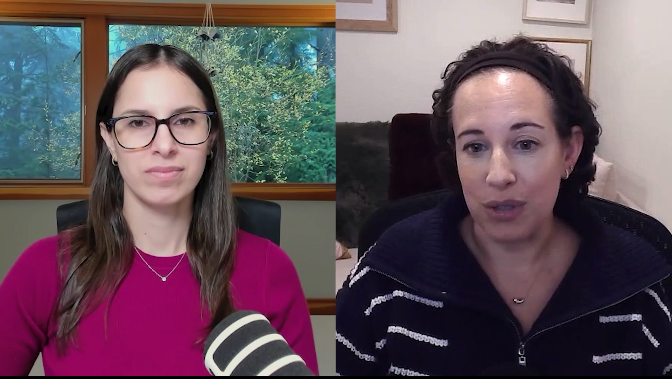
Naomi Midanik, a registered psychotherapist based in Ontario, spent 17 years in the corporate world before moving into therapy. Today, she works primarily with professionals, entrepreneurs, and working parents — many of whom are trying to function in jobs they don’t enjoy while still keeping everything else in their lives moving.
Interestingly, what she sees most often is a misunderstanding of what people are actually feeling.
Burnout Isn’t Always What You Think
Burnout has become a catch-all term. It’s the most socially acceptable way to talk about mental health at work. Saying “I’m burned out” tends to land better than saying “I’m anxious” or “I feel low.” The problem is that burnout has specific criteria. It typically shows up as emotional exhaustion, cynicism toward work, and a reduced sense of effectiveness. And importantly, it’s work-related.
That distinction matters because the solution depends on the cause. Burnout improves with rest from work. If you step away and nothing changes, it’s likely something else. In Naomi’s experience, a lot of high-performing people assume they’re burned out when they’re actually dealing with anxiety, low mood, or something more complex. And those require different kinds of support.
Most People Miss the First Signal
One of the trickiest early signs that something is off is emotional numbness.
Unlike stress or anxiety, numbness isn’t an intense sensation: it really feels like nothing. You’re still showing up, still getting things done, still functioning. But you’re not really feeling anything while you do it. That’s why it often goes unnoticed.
You might feel flat during things you normally enjoy. Conversations feel neutral. Wins don’t land. Even stress doesn’t register the way it used to. It can also show up as constant distraction — staying busy so you don’t have to sit with your thoughts.
For people who are used to being high-functioning, this can go on for a long time before it’s acknowledged.
What is ‘Radical Acceptance’?
When people feel stuck in a job they don’t like, the instinct is often to force change. Find a new role. Fix the environment. Push through harder. But for the majority of us, that’s not realistic. Financial constraints, job markets, or life circumstances can make immediate change difficult. This is where Naomi introduces the idea of radical acceptance.
At its core, it’s simple: acknowledge what you can’t change, and redirect your energy toward what you can. That doesn’t mean pretending everything is fine, but rather being honest about what isn’t. You can say, “I don’t like this job. I don’t like my commute. I don’t like my boss.” And still ask, what can I adjust inside this reality?
Maybe it’s how you use your commute. Maybe it’s setting better boundaries. Maybe it’s putting more intention into your life outside of work. Both things can be true at the same time.
When Reframing Doesn’t Work
There’s a version of this that people often try first: reframing everything into something positive. Sometimes that helps, and other times it certainly doesn’t.
There are situations where forcing a “good” angle can feel dismissive. If something is genuinely difficult or painful, skipping straight to the upside can feel like skipping over reality. Naomi makes a clear distinction here. Some situations call for reframing. Others call for acknowledgment first.
You can recognize that something is hard, frustrating, or unfair, and then decide what to do next. That sequence matters more than trying to convince yourself it was good all along.
The Answer Isn’t Always ‘Thinking More’
Another pattern she sees often is overthinking decisions. We try to reason our way to certainty. Make lists. Weigh pros and cons. Play out scenarios. It feels productive, but it often leads to more looping than clarity. The brain is wired to try to solve uncertainty this way. But it doesn’t work well when the decision is based on preference or feeling rather than a clear right answer.
In those moments, ‘thinking more’ only creates noise.
Clarity tends to show up when things get quieter. When the body is calmer. When you’re actually able to notice what you’re feeling instead of trying to outsmart it.
A Simple Way to Interrupt the Cycle
One of the most useful starting points is also the simplest: check in with yourself. Take a few minutes. Notice what’s happening in your body. Are you tense? Are you distracted? Are you already thinking about what’s next?
If that feels hard, there are grounding exercises that help bring you back into the present. One example is the 5-4-3-2-1 method. You identify five things you can see, four you can touch, three you can hear, two you can smell, and one you can taste. The key is to pay attention and go slow. That kind of awareness is what allows you to notice patterns early instead of waiting until something breaks.
What This Looks Like in Practice
You don’t need to solve everything at once. You can dislike your job and still create a better day-to-day experience. You can feel stuck and still make small adjustments. You can acknowledge that something isn’t right without immediately knowing how to fix it.
The important part is noticing. Noticing when you feel off. Noticing when you’re disconnected. Noticing when you’re trying to think your way out of something that needs a different kind of attention. From there, the next step tends to become clearer.
Listen to the Full Episode
🎧 Time Billionaires — “Burnout, Numbness, and Radical Acceptance with Naomi Midanik”
👉 Listen on Apple Podcasts
👉 Listen on Spotify
👉 Watch on YouTube
