Time, Procrastination, and Staying Present
Why we treat our future selves like strangers, what “revenge procrastination” really is, and how small daily choices quietly shape the life we end up living.
Most people know they should plan for the future. Save the money, book the flight early, go to bed on time. And yet the five minutes between meetings still gets lost to a scroll, the extra hour out with friends still feels harmless in the moment, and the to-do list still wins out over actually being present with the people in front of us.
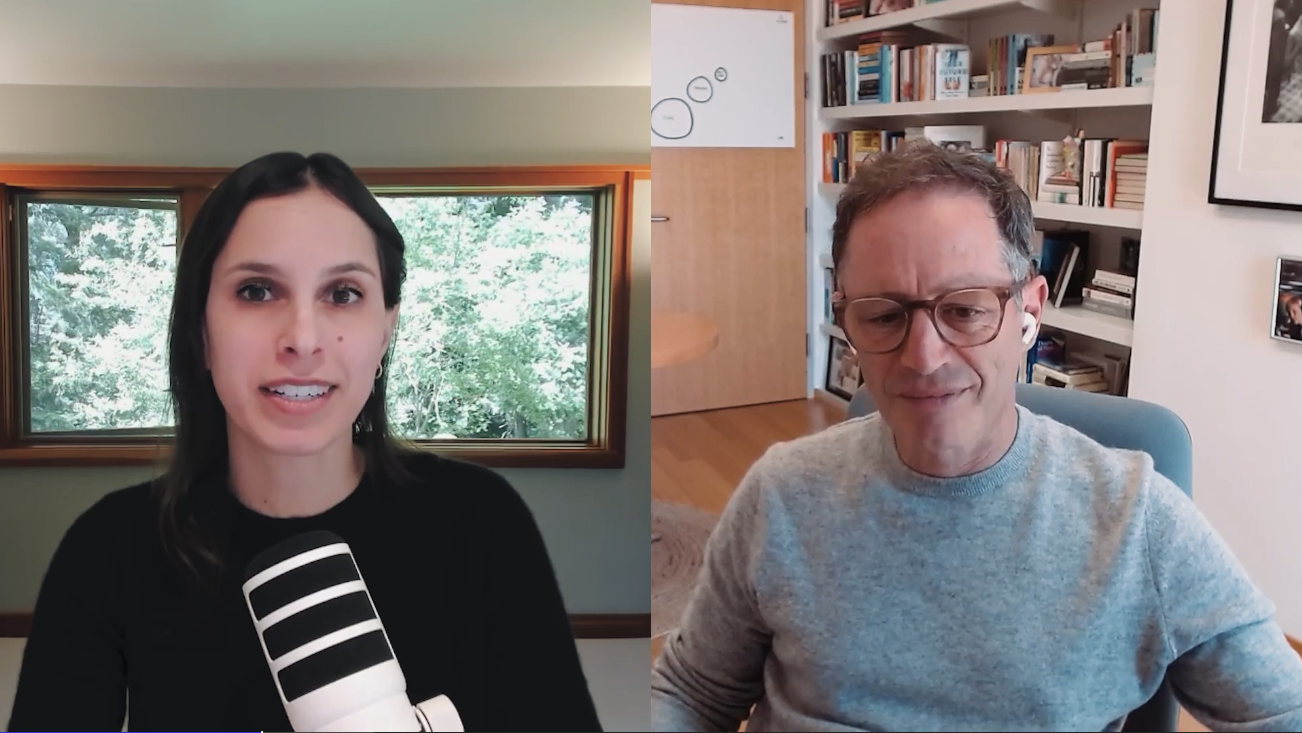
Hal Hershfield has spent his career explaining why that gap exists. He is a professor at UCLA’s Anderson School of Management, where his research blends psychology and behavioral economics to study how people think about time, decisions, and the version of themselves who will live with the consequences. He’s the author of Your Future Self and the host of the podcast The Behavioral Divide. His work has been featured in The New York Times and Harvard Business Review, and much of it centers on one core idea: the person you will become in five, ten, or even twenty years can feel less like you and more like a stranger you happen to be doing favors for.
Understanding that disconnect changes how the small moments of a day add up. Once you see the pattern, it gets a lot harder to keep quietly working against the person you are going to become.
Why your future self feels like someone else
Hershfield’s research starts with a simple but uncomfortable observation: on some level, everyone knows they will become an older version of themselves. Emotionally, though, that future person can feel disconnected, almost like a different individual entirely. That gap makes it so easy to make choices that knowingly cost that future self something, whether it is sleep, money, or time.
The one more drink, the one more hour with friends, the quick scroll between meetings. None of it feels costly in the moment because the person paying for it doesn’t feel fully real yet. The damage doesn’t land on you. It lands on someone who feels like an emotional stranger down the line.
Small moments add up far more than you think
A five-minute gap between meetings never feels like a real block of time, so it can’t be considered a loss when it disappears into a feed. Hershfield points out that this is exactly the trap: broken into small enough pieces, almost nothing feels impactful. But those pieces accumulate. A string of five-minute scrolls can add up to hours across a week, all while creating the sensation of having handled something urgent without ever touching what was actually important.
Rather than “eliminating” those moments, it’s worth being intentional about them instead, deciding in advance whether that time goes toward rest, connection, or actual deep work, instead of letting it default to whatever app is already open.
Revenge procrastination and the pull of control
One of the more memorable ideas from the conversation is what Hershfield calls revenge procrastination, a term he picked up from a friend describing her mother, a stay-at-home parent of five who stayed up late every night doing a crossword and having a beer, even knowing she should be asleep. It wasn't restful. It was a way of reclaiming a sliver of time that felt like hers in a life that otherwise offered very little control.
Hershfield connects this to a broader pattern: as people feel less control over their day-to-day lives and the wider world feels less predictable, the pull toward small acts of control intensifies. Staying up too late, scrolling too long, or claiming "just this one thing" becomes a way of pushing back against everything else that feels unmanageable, even when it works against the very future self trying to be protected.
“Precrastination” and the cost of living in the future
Just as procrastination pushes necessary tasks off, Hershfield describes the opposite tendency: “precrastination,” or doing things well before they need to be done simply for the sense of control it provides. Researchers also call this hyperopia, being so focused on the future that the present slips by unnoticed.
Planning ahead is often rational. Thinking about diapers, school choices, or travel logistics before they become urgent has real value. The trouble starts when planning is overapplied, when the mental energy spent preparing for a future moment crowds out the ability to actually be present for the moment happening right now. Hershfield is careful to note this isn't really about laziness or diligence. It's about which fear a person is protecting against: the fear of being unprepared, or the fear of missing the moment itself. Knowing which one tends to run the show makes it easier to catch and correct.
There’s a cost to not being present
Hershfield is quick to point out that future-focused thinking has consequences too, and not just in professional life. Parents in particular can lose real moments with their kids while telling themselves they're doing the responsible thing by planning ahead. And there is a second layer of cost when someone notices they weren't present and then spends more energy on guilt about it, staying stuck in the past exactly when they meant to be moving forward.
His point isn't that presence should always win over planning. It's that neither state should run unchecked, and that noticing the pattern is most of the work.
Commitment devices work, but people rarely choose them
Hershfield's current research, done with his student Megan Weber, looks at why commitment devices, structures that constrain future behavior in advance, are so effective and so rarely adopted. He points to Antabuse, a medication for alcoholism that makes someone sick if they drink and stays active in the bloodstream for days. It works remarkably well for the people who take it. Very few people choose to take it.
The insight from his research is about framing. People resist commitment devices when the message is "you lack the willpower to handle this yourself." They respond differently when the message shifts to acknowledging the obstacles: friends who bring it up, environments built to pull attention away, situations that make follow-through genuinely harder, regardless of anyone's discipline. Once the pressure people feel is framed as external rather than a personal failing, they're far more willing to put a real plan in place before the moment when it's needed.
The reason a device like this works at all comes down to decision fatigue. One decision made in advance, I will take this pill, replaces dozens of smaller decisions made in the moment, none of which have to be relitigated every single day.
An AI “digital twin” of your future self
One of the most compelling parts of our conversation was what Hershfield describes as newer territory research: AI-generated "digital twins" built from a person's own answers to a detailed set of questions about their beliefs, values, and preferences. In early studies, these AI twins respond to new questions in ways that correlate strongly with how the real person responds.
Hershfield's own research team has applied this concept specifically to future selves, creating a version of a person years down the line that they can actually have a conversation with. The value isn't prediction. It's not a time machine, and the twin's answers are a projection rather than a fact. What it offers instead is a kind of imagination scaffolding, a way to break out of circular rumination about a decision and instead talk it through, closer to the way cognitive behavioral therapy works than to fortune-telling.
The exercise anyone can try without a “digital twin”
For people without access to that kind of tool, Hershfield offers a much simpler exercise: instead of writing a letter to your future self, write a letter from your future self to who you are right now.
The distinction matters. A letter addressed to the future keeps the writer anchored in the present, thinking about tomorrow from today's vantage point. A letter written from the future forces a small mental leap, and that shift tends to surface more honest thinking about who someone wants to be and how they actually want to spend their time. Sometimes that exercise points toward change. Sometimes it reveals that things are going better than they felt in the moment, and the more useful move is gratitude rather than another course correction.
Balance isn’t the point
Hershfield is careful to close on a note that resists a tidy conclusion. This isn't an argument for prioritizing the future self over the present self, or vice versa. Sometimes precrastinating and staying future-focused is exactly the right call. Sometimes skipping an obligation to stay fully present with a partner or a child is the right call too.
The real problem shows up when someone gets stuck doing only one of those things, or swings unpredictably between the two without ever choosing on purpose. The goal isn't balance for its own sake. It's intention, being able to say clearly why this moment calls for planning or why it calls for presence, and being at peace with the trade-off either way.
Listen to the Full Episode
🎧 Time Billionaires — “How to Plan Effectively to Protect Your Focus” with Mark Talaga
👉 Listen on Apple Podcasts
👉 Listen on Spotify
👉 Watch on YouTube
