Psychological Boundaries Are Better for Your Time than Calendar Hacks: Dr. Anne Welsh on Energy Over Efficiency
Ask most burned-out professionals what they need and the answer is usually some version of a better system: A tighter calendar, a smarter app. One more productivity hack to finally get ahead of the workload. Dr. Anne Welsh spends her career watching that instinct backfire.
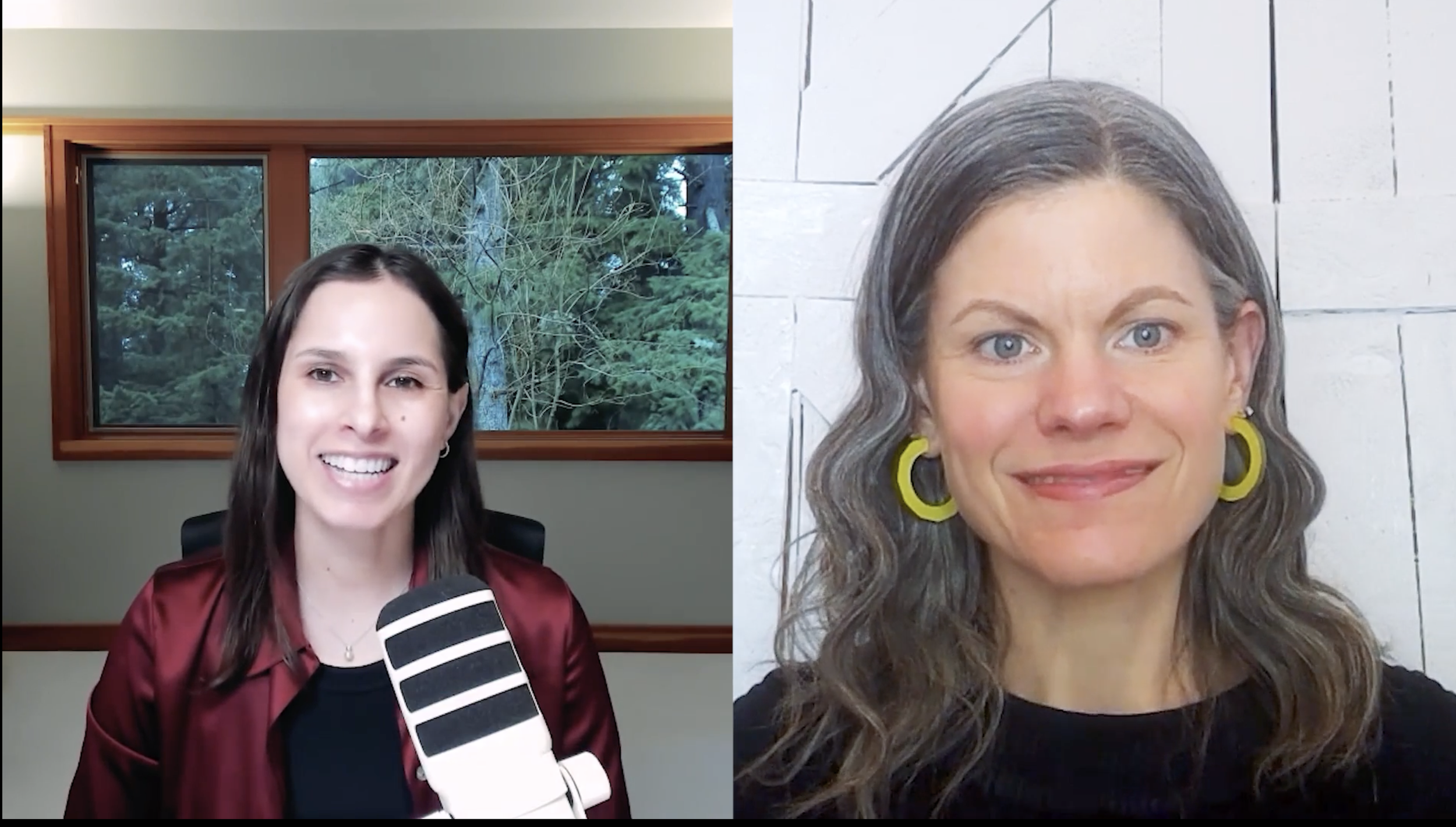
Dr. Welsh is a clinical psychologist and executive coach who works with high-performing professionals navigating ambition, burnout, and constant pressure, both as individuals and inside corporate teams. She began her career at Harvard University Health Services before opening her own practice, and she is a certified executive coach through the International Coaching Federation as well as a certified parental leave coach. Her book, Ambitious Mother, names what she calls the Ambition Paradox, the systemic pressures that push high-achieving women toward burnout, and argues for what she calls healthy striving instead of simply trying harder. She joined the Time Billionaires podcast to explain why the people who most need to slow down are usually the ones who got successful by never slowing down at all.
The Real Shift Is From Controlling Time to Allocating It
Dr. Welsh's central reframe sounds subtle but changes almost everything downstream of it. Most people treat time as something to control, and the tighter they grip it, the more it seems to slip away. She encourages clients to think of time instead as something they steward, something they get to choose how to spend.
That shift loosens the compulsion to optimize every minute and makes room for a standard most high performers have never allowed themselves: good enough. Think of time like water. Grab at it and it slips through your fingers. Cup it gently and you hold far more.
Calendar Hacks Aren’t the Fix, Psychological Boundaries Are
Dr. Welsh is direct about what typically doesn't work: time management in the form of calendar hacks. What people actually need is better psychological boundaries, the internal clarity around what is genuinely theirs to carry versus what they've simply absorbed from everyone around them.
Part of building that clarity means deciding in advance what deserves A+ effort and what can be a B, a C, or even a D. Success doesn't have to be binary. Letting go of the instinct to bring full intensity to every task is uncomfortable for people whose careers were built on saying yes to everything and outworking every problem in front of them.
Dr. Welsh names the trap plainly: that pattern gets people promoted for years, right up until the point it starts working against them.
A Company Culture Built Around Not Responding
One striking example from Dr. Welsh's client work involves a company where the internal norm is that if you don't have real input or a concern, you simply don't react to a message at all. No acknowledgment, no emoji, nothing. Everyone assumes silence means agreement, and if an issue is significant, it will resurface at the next meeting.
Dr. Welsh explained why this works from a brain-science standpoint. Responding to any message requires a cognitive set shift: acknowledge the request, decide on a response, generate that response. Those feel like one seamless action, but they're actually three separate tasks. A culture that allows silence as a valid answer removes the middle step entirely, freeing up bandwidth that would otherwise go toward manufacturing a reply nobody needed. She was careful to note this only works inside a workplace culture built on mutual respect and clear feedback norms. Dropped into the wrong environment, it reads as disengagement rather than trust.
The Client Who Negotiated a Four-Day Week and Got Promoted
Dr. Welsh's clearest illustration of this philosophy came from a client who was, by every external measure, thriving: high-performing, well-respected, and completely maxed out. Her anxiety was constant, and her instinct was to look for better productivity tools.
Instead, Dr. Welsh asked a different question: what actually deserves your best energy? That conversation led the client to negotiate down to a four-day workweek, not to reduce her output, but to protect a day for admin, a passion project, and unstructured thinking time. Leadership agreed to a trial. The client's performance didn't dip. It improved. She became sharper in meetings, faster to set clear priorities, and eventually earned a promotion, along with direct feedback that colleagues valued her because she was the best prioritizer on the team. When she set clear boundaries around her own time, everyone working with her benefited from that same clarity.
“Time Leftovers” Are Making You Feel Depleted
One of Dr. Welsh's most vivid frameworks comes from her own life as a parent. When her kids were small and she was stretched thin, she developed a habit of eating their leftovers instead of making herself a real meal, a quarter of a peanut butter sandwich here, an abandoned chicken nugget there. It left her feeling run-down, unsurprisingly, because none of it was food she actually wanted.
She sees people doing the exact same thing with their time: squeezing tasks into whatever leftover pockets remain after everyone else's needs are met, treating other people's urgency as a personal emergency. It doesn't satisfy, and it doesn't sustain. The alternative is intentional presence, choosing to be fully in one space and then fully in the next, rather than scattered across both at once.
The 90-Second Completion Pause
For anyone with only a few spare minutes between meetings, in a pickup line, or waiting for an appointment, Dr. Welsh offers two small practices built on the same idea: closing loops instead of opening new ones.
The first is what she calls a completion pause. Name something you finished today, however small. Acknowledge the effort behind it. Take 90 seconds to actually feel that sense of completion in your body, maybe even a hand on your chest and a breath or two. Most achievement-driven people skip this step entirely, moving straight to the next task before registering that the last one is done. Over time, that habit erodes confidence rather than building it, because the nervous system never gets the signal that it's safe to stand down.
The second practice is the inverse: naming something you're setting down. A responsibility that isn't actually yours, someone else's emotional reaction, someone else's urgency mistaken for your own. A simple internal line like "this can wait" or "this is a Monday problem" does the job. Both practices interrupt the same hypervigilant loop, the sense of never having accomplished enough to earn a moment of rest.
Time Management Is Really a Question About Values
Dr. Welsh's closing point reframes the entire conversation. Time management gets marketed as a productivity tool, but it's really a psychological and values-based question, because how someone chooses to spend their time is how they choose to spend their life. She points out that if the answer were simple, there wouldn't be 500 books promising to solve it.
That framing invites a useful exercise: naming a trade-off honestly, asking directly whether you'd rather spend an hour on a task than an hour with someone who matters to you. Naming the trade-off makes the choice conscious instead of automatic, and stops it from curdling into quiet resentment. Dr. Welsh adds an important nuance here. The choice isn't always as simple as preferring work over family. Sometimes it's about the paycheck that keeps a roof overhead, which is its own legitimate value. The goal isn't to eliminate every hard trade-off. It's to make the trade-off a conscious one, tied to something the person actually cares about, rather than a default nobody chose on purpose.
The Takeaway
Boundaries, not hacks. Allocation, not control. A completion pause instead of an endless to-do list. Dr. Welsh's approach keeps circling back to the same underlying idea: safety in the nervous system is what actually produces focus, creativity, and sustainable performance, and that safety comes from intentional choice, not from squeezing more out of every minute.
Listen to the Full Episode
🎧 Time Billionaires — “Boost Focus and Reduce Overwhelm in 90-Second Micromoments” with Dr. Anne Welsh
👉 Listen on Apple Podcasts
👉 Listen on Spotify
👉 Watch on YouTube
